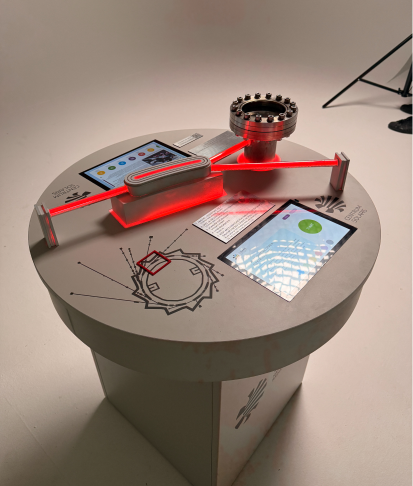
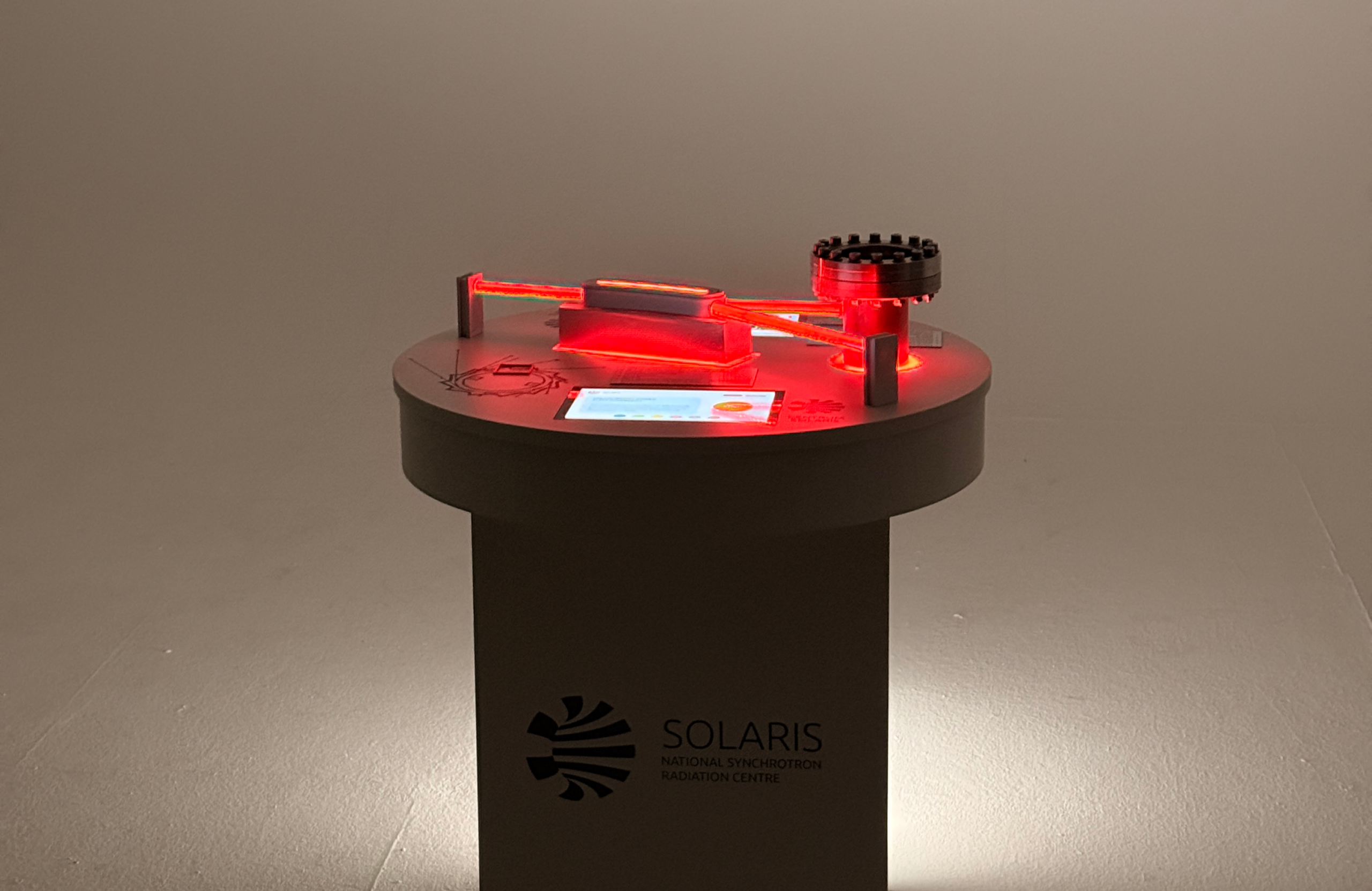
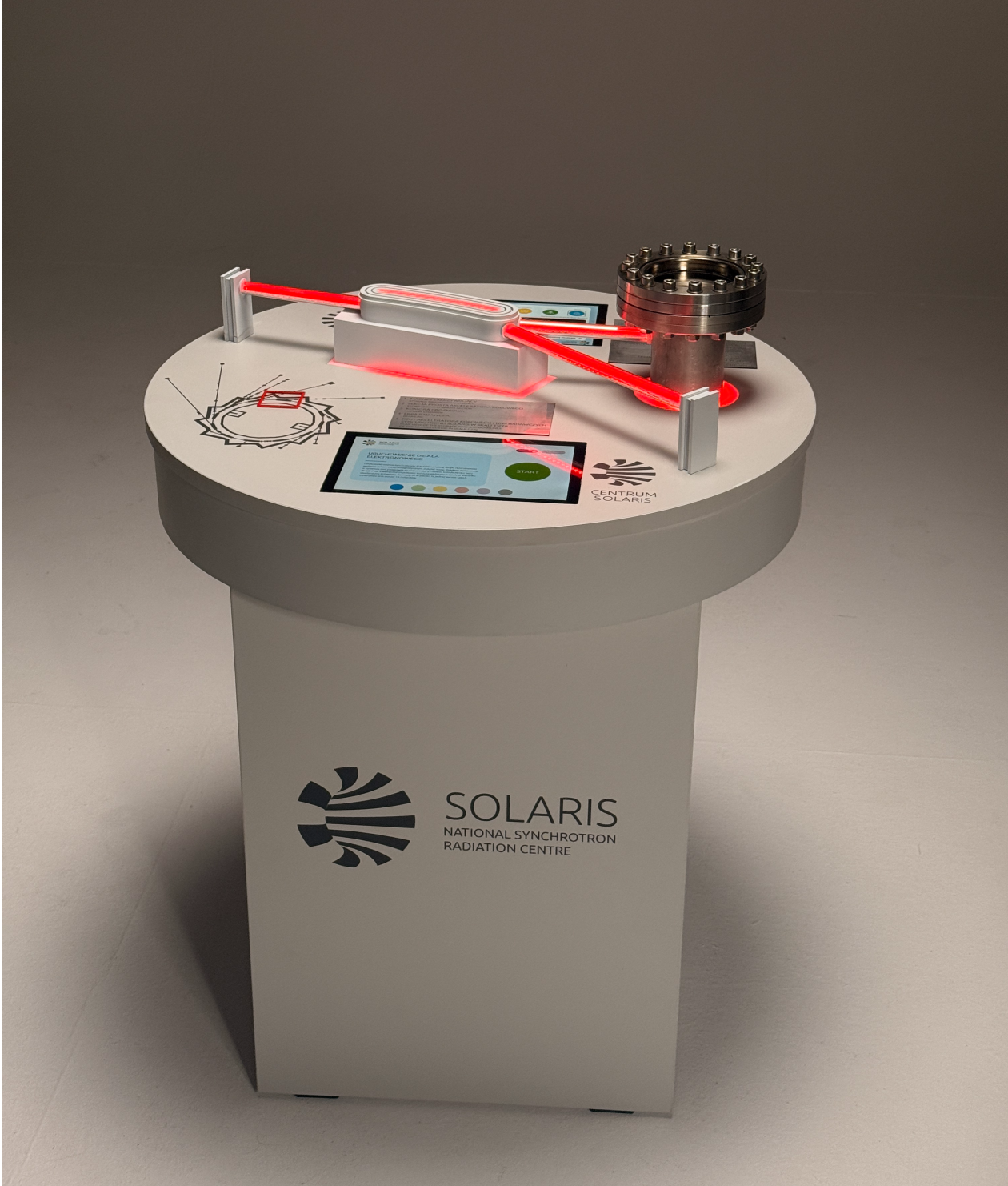
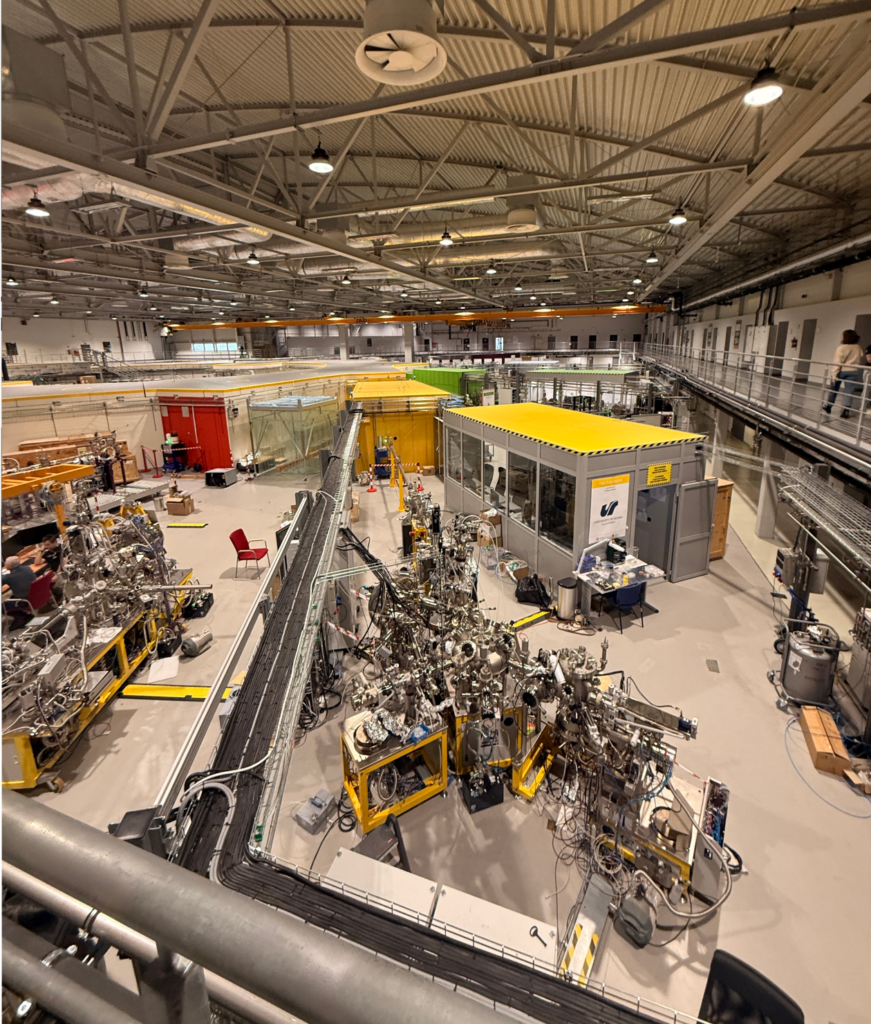
We developed the conceptual strategy behind this educational model, designed to explain the complex processes taking place inside the Solaris synchrotron radiation centre. It was not an easy brief: synchrotron technology is highly advanced, difficult to explain even in words to a non-specialist audience, let alone translate into physical, model-making form. Early in the process we considered embedding screens into the model paired with a companion mobile app, layering digital explanation onto the physical form.
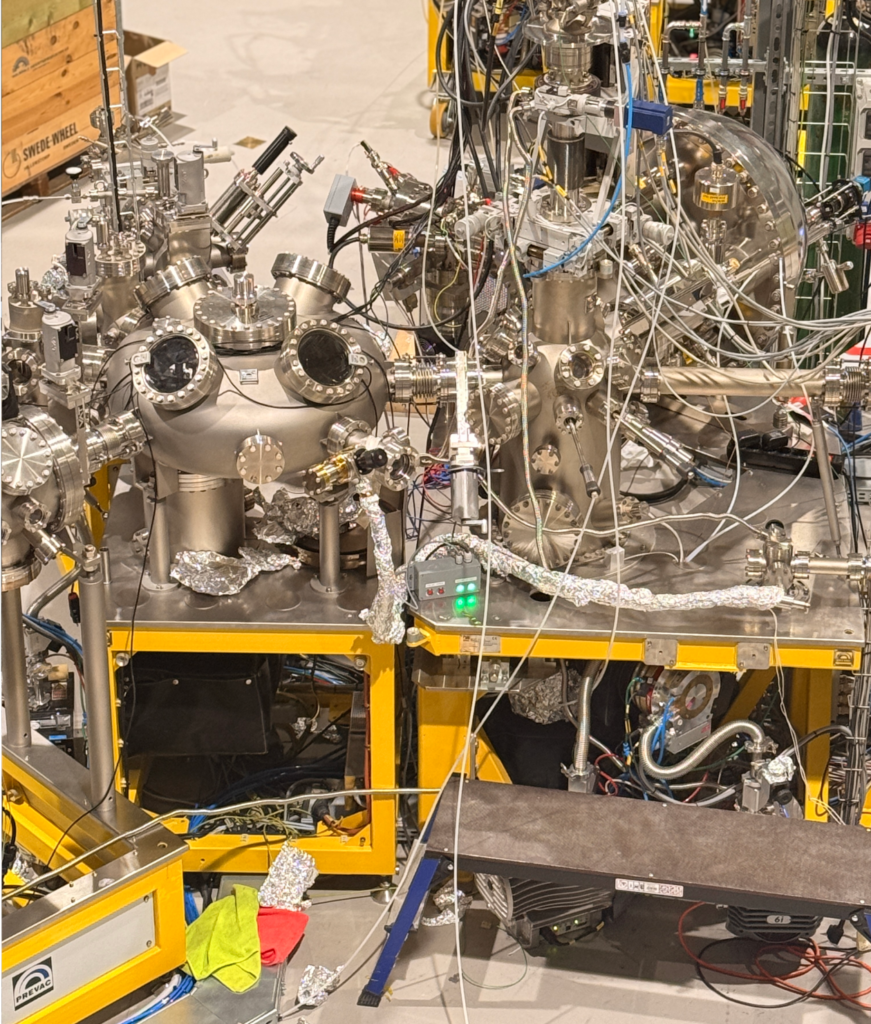
The final design of a physical model took a minimalistic path - pure shapes to show the logic behind the science. The model distills the synchrotron down to its essence: the ring of bending magnets at its core, with research beamlines radiating outward from it, each leading to an experimental station. One beamline is built from an authentic fragment of a real Solaris beamline, fitted with an embedded circular screen that shows the range of experiments carried out at the facility and the breadth of scientific and industrial fields that rely on it.
BUILT TO TRAVEL THE WORLD
The model was built to travel. It comes with dedicated transport cases and a foldable exhibition plinth, and runs off its own remote power station, so it can be taken to conferences anywhere without needing to be plugged into the mains — a single charge lasts 12 hours.
LAUNCH THE SYNCHROTRON!
The tabletop sits at a height that keeps it easily accessible for children and visitors with disabilities, and two applications can run side by side: one powers up and drives the synchrotron itself, the other walks visitors through an overview of the experiments it enables.